

By Jocelyn Wong and Ananiya Narmathan
Origins
The origins of this history can be traced back almost 4000 years ago and are said to start from the worshipping activities in Asia’s ancient agrarian society. From the Shang Dynasty to the present date, Lunar New Year holds a special place in the hearts of many.
Legend
Like many festivals in Asia, Lunar New Year is full of legends and myths. One of the most popular ones regards the mythical beast Nian who lived under the sea or in the mountains. The beast ate livestock, crops, and even children on New Year’s eve. Hence, all the villagers would flee to remote mountains in order to stay safe every year. Those who stayed put food at their doors for the Nian to prevent it from attacking people and causing destruction. Many believe that a wise old man figured out that loud noises like firecrackers and the colour red scared the Nian. Thus, people started hanging red lanterns and scrolls outside their houses and used firecrackers to scare the Nian away.
Traditions
Although a lot of Asiatic countries celebrate Lunar New Year, we will focus on the traditions of China, Vietnam, Korea, Mongolia and Tibet.
Chinese New Year: 春節/chunjie
One of the more noticeable Chinese traditions is the red decoration. The reason why red is used as a celebratory colour in Chinese culture is that it is auspiciously believed to ward off bad energy and it brings prosperity and good fortune. Another tradition performed prior to New Year’s day, would be the thorough cleaning of a family’s house. You are symbolically sweeping away the bad luck of the preceding year, for a fresh start in the new year. Lastly, red pockets filled with cash are usually given by married couples to younger family members, and traditional lion dances are performed.

Vietnam New Year: Tết
Vietnamese children will similarly receive red envelopes filled with cash from their elders. They will also have large family gatherings where food is served and eaten. Some of their popular dishes include Banh Chung, which is made of tightly-packed sticky rice with meat or bean filling. Vietnamese people further decorate their homes with fruit trees such as peaches and oranges.
Korean New Year: 설랄/seollal
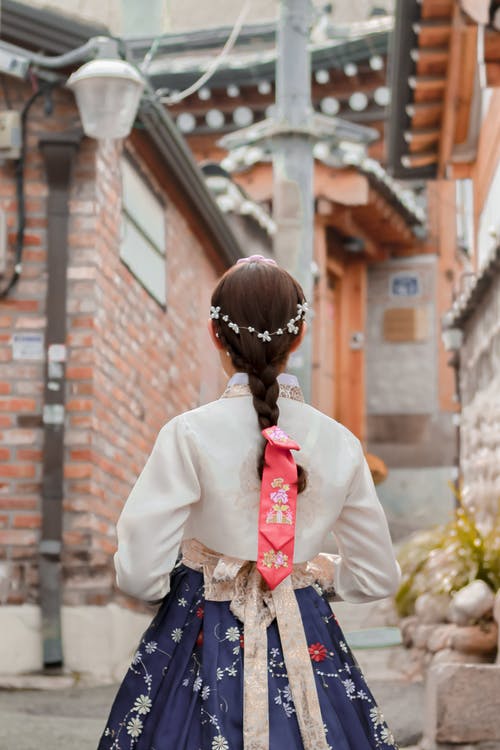
One of the most important traditions during Seollal is the practice of bowing deeply (세배 sebae) to elders while wishing them happy new year in traditional Korean clothing (한복 hanbok). One of the foods served during this time is rice cake soup (떡국 tteokguk) because the white colour of the sticky rice signifies purity and a new start.
Mongolian New Year: Tsagaan Sar
It is tradition for the men to wake up early to watch the first sunrise of the first day of the new year. Meanwhile, the women prepare milk tea and food for the guests that come to visit. Right before the guests leave, they present their hosts with gifts. It was presumed that the more expensive the gift, the better your family did in the preceding year.
Tibetan New Year: Losar
Losar lasts for five days. Before the new year starts, they exorcise ghosts, clean the house and change their fragrant curtains. Then on the first day of the new year, Tibetans celebrate with family and close neighbours. Afterwards, they head to a well or river and fetch the “first water of the year,” and carry it back to their homes. The next day, Tibetans visit their relatives and friends. Performances such as Vbrasdkar dancing are enjoyed with the belief that they will bring good fortune and luck in the new year. On the final day of Losar, Tibetans will burn pine trees or other herbs and hang multi-coloured prayer flags to gain the blessings of the mountain and river gods.
Sources
90 Day Korean. “Korean Lunar New Year: Everything You Need to Know about Seollal.”
Cindy. “Chinese New Year: Food/Traditions/Greetings for a Lucky Tiger Year 2022.”
“How Mongolia Celebrates Lunar New Year (Tsagaan Sar) — Mongolia Tours & Travel 2022/2023.”
“Lunar New Year | Traditions, Legend, & Facts | Britannica.” Encyclopædia Britannica, 2022The Origin and History of Chinese New Year: Who Started and Why, 2017
Zhao, Ruby. “Vietnamese New Year (Tet) – How It’s Celebrated.” China Highlights, 2022
 Titan Times