
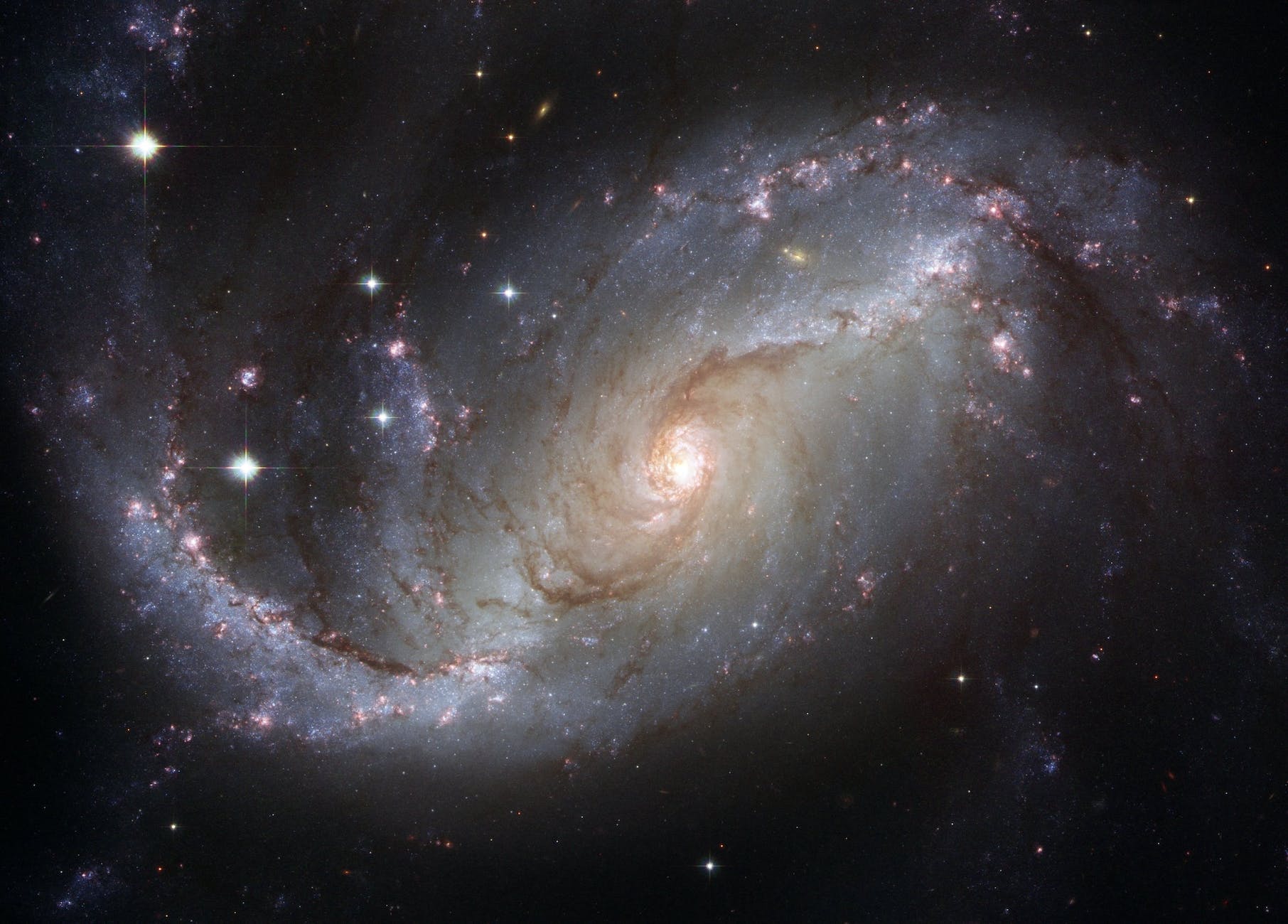
On November 4, scientists were able to locate and record the closest existing black hole known to Earth.
The void was first identified using the European Space Agency’s Gaia spacecraft—giving it the name of Gaia BH1—before being further researched by the Gemini North telescope located in Hawaii.
Inside the International Gemini Observatory, operated by NSF’s NOIRLab, astronomers detected the black hole from approximately 1,600 light years away—three times closer than the last black hole; roughly 5,000 light years away. Gaia BH1 is close to 10 times larger than our sun and is located in the constellation Ophiuchus, or more known as the serpent bearer.
When discovering the empty void, researchers have also found a star that acts as a companion to the black hole. Kareem El-Bardy, an astrophysicist for the Center of Astrophysics states, “This is the first unambiguous detection of a Sun-like star in a wide orbit around a stellar-mass black hole in our Galaxy”. Identifying the mass, it was observed that the star orbits the black hole at a similar distance to Earth orbiting the sun.
It is unclear how the black hole formed or how the star companion was able to develop with the black hole in its orbit. However, astronomers intend to investigate these masses in further detail for a clearer answer.
Works Cited
“Astronomers Discover Closest Black Hole to Earth.” ScienceDaily, ScienceDaily, 4 Nov. 2022, https://www.sciencedaily.com/releases/2022/11/221104113504.htm.
Dunn, Marcia. “Closest Known Black Hole to Earth Spotted by Astronomers.” AP NEWS, Associated Press, 4 Nov. 2022, https://apnews.com/article/astronomy-science-black-holes-41b772e9fbf47f369a89fda813a98529#:~:text=CAPE%20CANAVERAL%2C%20Fla.,more%20massive%20than%20our%20sun.
 Titan Times