
By: Artus Siu

Photo Link Picture by Wild Shots Photography on Pexels.
The week of November 20-26, 2023, is designated to be Canada History Week, seven days of celebration and review of our rich Canadian history. From the birth of Canada to the present, our motherland has gone through dramatic changes following historical events. Here, we take a look at two significant events that have shaped our modern Canadian society.
The Dominion Day: July 1, 1867
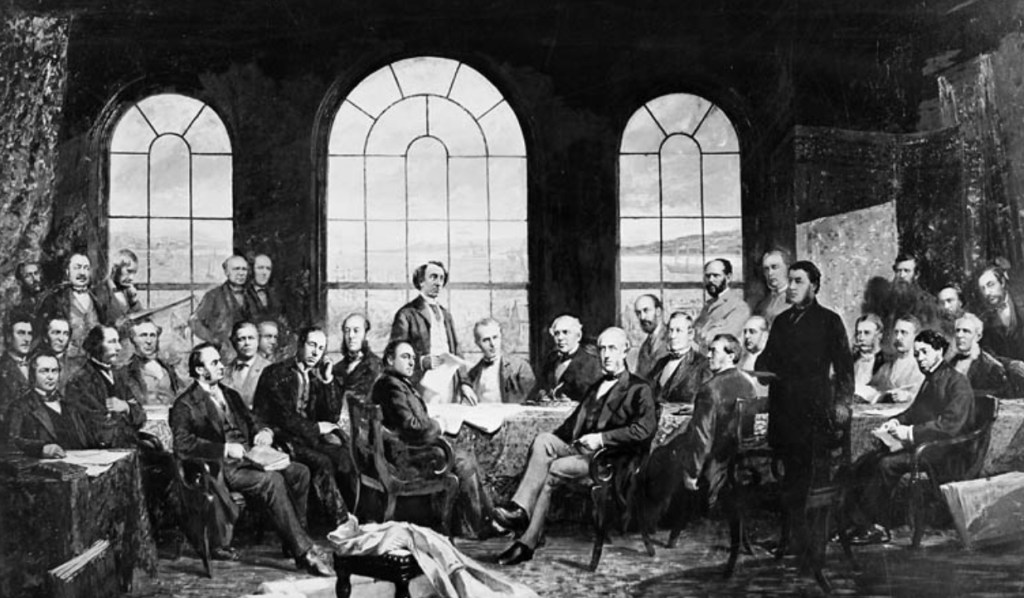
Photo Link Picture from the Canadian Encyclopedia
Before being an independent nation, Canada was once a prominent British colony called British North America. After the American independence in 1776, Canada remained as the only stronghold that Great Britain had in North America. In fact, many British loyalists fled to the north in the face of defeat. However, like their American counterparts, Canadians started to long for independence in the 1800s.
Both external and internal pressures gave rise to the independence movement. Internally, the suggestion of the unification of the colonies of British North America had been floating around since 1814. The separated colonies were also a roadblock to effective communication and decision-making. Externally, the fear of an American invasion was looming in the air. After the breaking of the Canadian-American Reciprocity Treaty (a free trade agreement) after the American Civil War, some Americans had shown the intent of invading British North America in the name of the “manifest destiny”, an ideology to unify the whole of North America under the stars and stripes. The society supported the option of building a confederation to defend Canadian land under one united government.
After decades of diplomatic meetings, such as the Charlottetown Conference and the Quebec Conference, the Province of Canada (modern-day Ontario and Quebec), jointly led by Sir John. A. Macdonald and Sir George-Étienne Cartier, New Brunswick, directed by Sir Samuel L. Tilley, and Nova Scotia, led by Sir Charles Tupper, succeed in creating the Dominion of Canada. On March 29, 1867, Queen Victoria of Great Britain gave her royal assent to the creation of Canada on July 1 of that year. As the day arrived, the British North America Act (now the Constitution Act) united all three provinces to form the Dominion of Canada, ending more than two centuries of British rule and opening a new page in the history books.
Second World War: September 10, 1939 – August 14, 1945
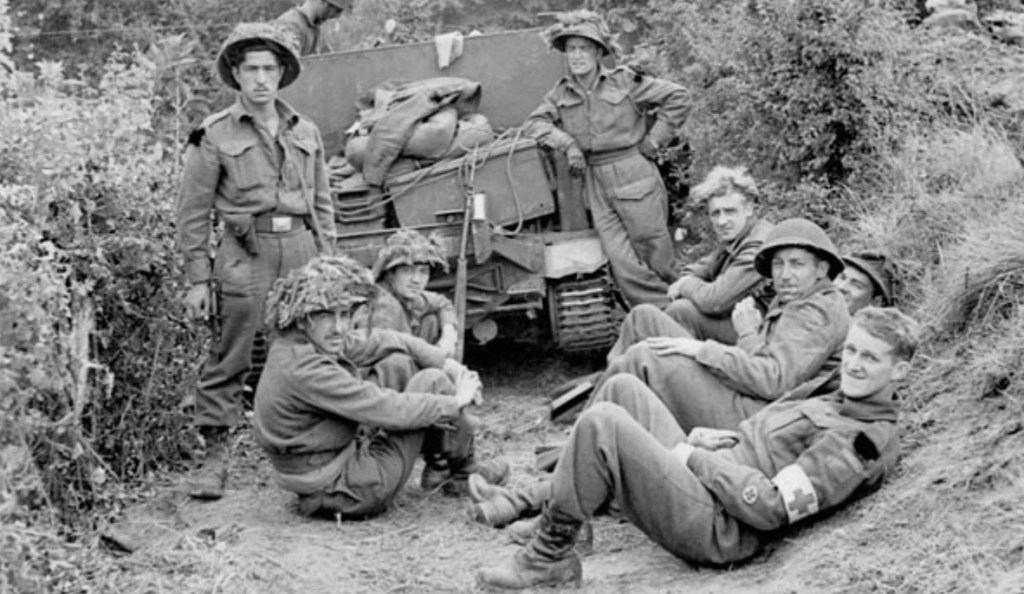
Photo Link Photo from the Canadian Encyclopedia
In World War II stories, one often hears about the experiences of British and American troops on the front line. However, the efforts of Canadian troops in both the European and Pacific theaters cannot be understated.
Declaring war against Nazi Germany on September 10, 1939, Canada joined the Commonwealth nations in the fight against Hitler years before the US did. Canada deployed her troops to the European front for numerous missions, such as the defense of the United Kingdom against the Luftwaffe, the German air force. A grand total of 112 Canadian pilots served in the Royal Air Force during the Battle of Britain. The No. 242 Squadron RAF, an all-Canadian RAF squadron, and the No. 1 Squadron of the Royal Canadian Air Force served alongside their British counterparts in the skies of Europe. In addition to combat missions, Canada also supplied British logistics with naval convoys and airlifts, even producing the famed Lancaster bomber of the RAF in Malton, Ontario. On land, nationwide conscription was underway, with more than one million Canadians taking up arms against the Nazis.
Unbeknownst to many, Canada also had significant contributions in the Pacific theater. Since the start of the war, 10,000 Canadians participated in the war against Imperial Japan. Notably, the failed Defence of Hong Kong in 1941 saw 2000 Canadians bravely standing their ground amid devastating Japanese bombardment and aggressive military actions. Though the battle was eventually lost, their bravery is forever remembered in the Defence of Hong Kong Memorial Wall.
The gallantry of Canadians in World War II cemented Canada as a global country in the postwar era. Canada expanded her global trade network and Canadians’ lives slowly improved. Even today, the effects of these courageous acts in the war can be seen.

Photo Link Photo from the Government of Canada website
Works Cited
“Canada Flag at a Pole on Mountain Area · Free Stock Photo.” Pexels, https://www.pexels.com/photo/canada-flag-at-a-pole-on-mountain-area-10227950/. Accessed 17 November 2023.
“Defence of Hong Kong Memorial Wall.” Canada.ca, 19 February 2020, https://www.canada.ca/en/canadian-heritage/services/art-monuments/monuments/defence-hong-kong.html. Accessed 17 November 2023.
Foot, Richard. “Second World War (WWII).” The Canadian Encyclopedia, https://www.thecanadianencyclopedia.ca/en/article/second-world-war-wwii. Accessed 17 November 2023.
Forsey, Eugene A., and Matthew Hayday. “Dominion of Canada.” The Canadian Encyclopedia, https://www.thecanadianencyclopedia.ca/en/article/dominion. Accessed 17 November 2023.
“History of Canada Day.” Canada.ca, 1 July 2023, https://www.canada.ca/en/canadian-heritage/services/canada-day-history.html. Accessed 17 November 2023.
 Titan Times