
By: Hasini Vijay Inbasri
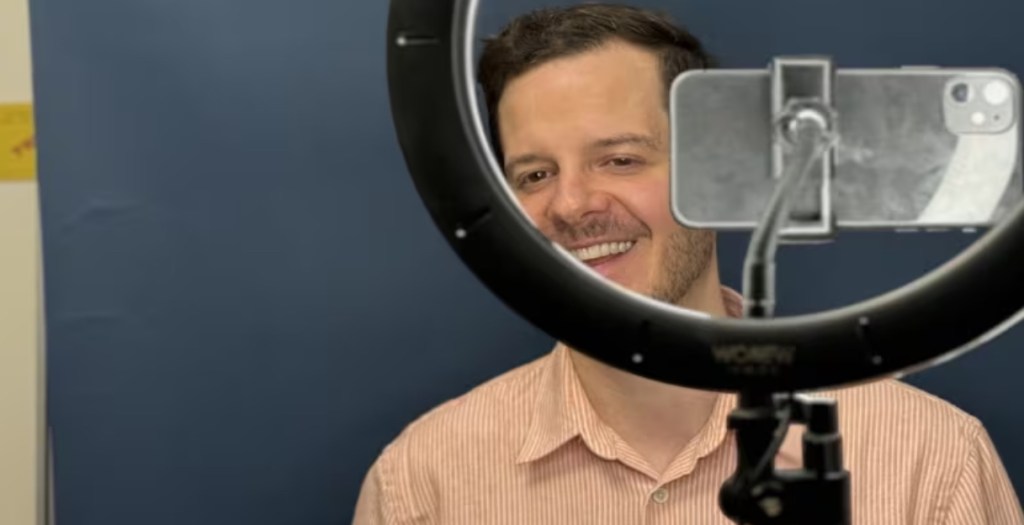
Actor and producer Julian De Zotti is one of the performers who have witnessed the industry turn almost entirely to self-tapes over in-person auditions. While it offers several benefits, it can also pose a challenge to actors. (Eli Glasner/CBC)
In today’s digital age, self-taping auditions have become the new normal for actors hoping to land a role in Hollywood. This new trend has been met with mixed reactions from the acting community. While some actors appreciate the convenience and flexibility of self-taping, others feel like they are missing out on the traditional audition experience for many reasons.
One of the biggest advantages of self-taping is the convenience it offers. No longer do actors have to travel long distances to audition for a role. Instead, they can simply record their audition from their home and submit it online. This saves time and money, making it easier for actors to audition for multiple roles in different locations. “Being Indigenous, where I grew up, I never dreamed that I would ever get to be an actor because you had to move,” the Saskatchewan actor from Peter Ballantyne Cree Nation near Prince Albert told in an interview with CBC News. “Nowadays, people are auditioning from all across the country from their hometowns. There’s no limit.” Another advantage of self-taping is the ability to take multiple takes until the actor is satisfied with their performance. This can be especially helpful for actors who struggle with nerves during traditional auditions. Self-taping also allows actors to experiment with different interpretations of the script, giving them a better chance of standing out from the competition.
However, not everyone is sold on the idea of self-taping. Many actors feel that the lack of in-person interaction with casting directors and producers makes it harder for them to showcase their talent and make a lasting impression. They argue that self-taping takes away from the collaborative nature of the audition process, where they can receive feedback and direction in person. Another issue with self-taping is the fact that actors are responsible for their lighting, sound, and video quality. This can be a challenge for those who don’t have access to professional equipment or expertise. Sometimes, a poorly lit or low-quality audition tape can hurt an actor’s chances of getting the role.
In conclusion, self-taping auditions have both advantages and disadvantages. While they offer convenience and flexibility, many actors miss the traditional audition experience and the opportunity to receive feedback and direction in real time. Even as challenges surrounding self-tapes increased for actors, it’s unlikely they’ll ever fade completely due to the casting benefits they offer.
Works Cited
Bushman, Monica. “SAG Strike: What Are ‘Self-Tapes’ And Why Are Actors So Fired Up About Them? Actor Sarah Ramos Explains.” LAist, 26 July 2023, https://laist.com/news/arts-and-entertainment/sag-strike-what-are-self-tapes-and-why-are-actors-so-fired-up-about-them-actor-sarah-ramos-explains. Accessed 4 March 2024.
Weaver, Jackson. “Self-tapes are Hollywood’s new normal for auditions. Not everyone is happy.” CBC, 27 February 2024, https://www.cbc.ca/news/entertainment/self-tape-acting-1.7126250. Accessed 4 March 2024.
 Titan Times