
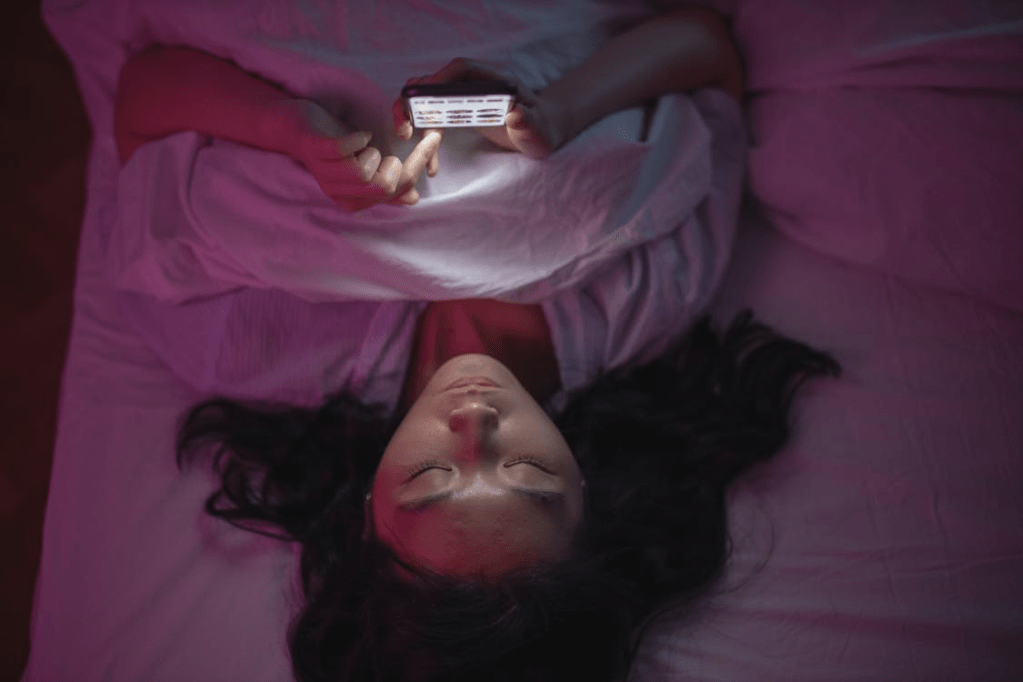
Photo by cottonbro studio, on https://www.pexels.com/photo/a-woman-lying-on-bed-and-holding-an-iphone-7351144/
By: Kayla Lam
“Doomscrolling” is an internet slang term that was recently recognized as an official word by Merriam-Webster in 2023. It usually refers to scrolling short videos on social media platforms for extended periods of time, sometimes specifically referring to bingeing negative news online this way, hence the name “doomscrolling”– it quite literally means scrolling to your “doom.” Commonly an unproductive day, neglected responsibilities, or in the latter case, burnout and anxiety from consuming large amounts of negative information such as tragedies or crises. The term was coined during the COVID-19 pandemic, when many students and youth were online, and it has become a rising trend.
Doomscrolling is commonly known as a harmful phenomenon most often found among students and young people. Scrolling through bite-sized content consistently trains the brain’s reward system to constantly seek immediate gratification– namely, scrolling. The feeling of quickly consuming new information through scrolling provides a sense of quick reward and validation. Therefore, students who doomscroll may find it harder to focus on longer, complex, or less engaging activities such as completing homework, studying, reading, and even conversing. When short-form content online becomes a student’s main source of news, this can have serious negative effects on their critical thinking. When faced with a constant bombardment of surface level headlines and news all packed into a 30-second clip, students may become used to considering only the brief surface of new information. With diminished critical thinking skills, students become more susceptible to harmful misinformation and disinformation, also known as the common occurrence of believing everything you see online. All these factors lead students to face constant exposure to “doom” or negative content without in-depth understanding or pondering, continuing the cycle of doomscrolling. Besides the mental toll, it can also have negative consequences on a student’s body. Being on your phone for hours on end can lead to worsening posture and neck pains, and long-term exposure to blue light emitted from the device screen can strain the eyes. In worse cases when doomscrolling takes up too much of a student’s time, it can lead them to neglect sleep, potentially leading to difficulty sleeping and even insomnia.
Yes, social media is designed to trap you within this scrolling loop, but it doesn’t mean you can’t climb out of this void of endless consumption with effort. As common as this addiction is, there are also common ways to fight it. If the negativity that social media algorithms force-feeds you is causing you anxiety or unnecessary stress, do your best to personalize it. Don’t stop on or share videos of negative topics you don’t want to surround yourself with, and block accounts and tags that promote them. Staying informed about news is a good thing, but when it starts doing you more harm than good, it is time to lay down boundaries and set time limits. There are many apps or tools on your device that can do this for you, including the Screen Time settings feature on Apple devices. To physically get yourself off of your phone at times when you need to focus, such as on homework, group work, or studying, keep your phone away and turn off all notifications to minimize the chance that the urge to scroll creeps into your mind. If you still can’t stop, disconnect from the online world and go out for a walk. When you ground yourself and stop stressing over every little thing you learn online, it’s easier to feel more connected to the real world around you and your environment. If you feel the urge to scroll, pick up a book, or an instrument, or some kind of sports equipment, or whatever you should be focusing on like your schoolwork. And if none of the above works, seek help from people around you. At home, you could have your parents confiscate your phone. In a school setting, you could lock your phone in your locker or give it to a friend for safekeeping.
Remember– out of sight, out of mind. Time is valuable, don’t succumb to the urges and let yourself “doomscroll” it away!
Works Cited
Starkman, Evan. “What’s Doomscrolling and Can It Harm Me?” WebMD, 6 September 2022, https://www.webmd.com/balance/what-is-doomscrolling. Accessed 2 December 2025.
“We’ve updated the Merriam-Webster.com Dictionary with 690 New Words.” Merriam-Webster, https://www.merriam-webster.com/wordplay/new-words-in-the-dictionary-september-2023. Accessed 4 December 2025.“What Doomscrolling Is and How To Stop.” Cleveland Clinic Health Essentials, 6 May 2024, https://health.clevelandclinic.org/everything-you-need-to-know-about-doomscrolling-and-how-to-avoid-it. Accessed 4 December 2025.
 Titan Times